Time Management for Students: 10 Effective Tips to Study Smarter

Key takeaways
- Time management for students helps improve academic performance, reduce stress, and maintain a healthy study-life balance.
- Creating a realistic daily study schedule helps students organize assignments, revision, and personal activities.
- Setting clear goals and prioritizing important tasks are essential time management skills for students.
- Studying in short, focused sessions with regular breaks can improve concentration and productivity.
- Avoiding procrastination and minimizing digital distractions helps students complete tasks on time.
- Maintaining adequate sleep, physical activity, and relaxation supports effective learning.
- Reviewing weekly progress helps students identify areas for improvement and develop better study habits.
Introduction
Have you ever planned to study for two hours but ended up spending most of that time scrolling through your phone? Or struggled to complete an assignment because you started working on it just before the deadline?
These are common challenges for school and college students.
Between classes, homework, examinations, extra curricular activities, and personal responsibilities, managing time effectively can sometimes feel difficult.
This is where time management for students plays an important role.
Time management is not about studying all day. It is about organizing your responsibilities, setting priorities, and making better use of your available time.
Developing effective study habits alongside a structured routine can help students improve concentration, complete assignments on time, and maintain a healthy balance between academics and personal life.
In this article, we will explore practical time management tips for students, effective techniques, daily study schedules, and common mistakes to avoid.
What Is Time Management for Students?
Time management for students is the process of planning, organizing, and prioritizing academic and personal activities to use time efficiently.
It helps students decide which tasks need attention, how much time each activity requires, and when responsibilities should be completed.
For example, a college student may need to attend lectures, prepare assignments, study for examinations, and participate in extracurricular activities.
Without a proper schedule, these responsibilities may overlap, resulting in missed deadlines and unnecessary stress.
However, following a realistic timetable can help students organize their workload and develop consistent learning habits.
The Open University offers additional guidance on time management and study, including ways to plan academic activities around other responsibilities.
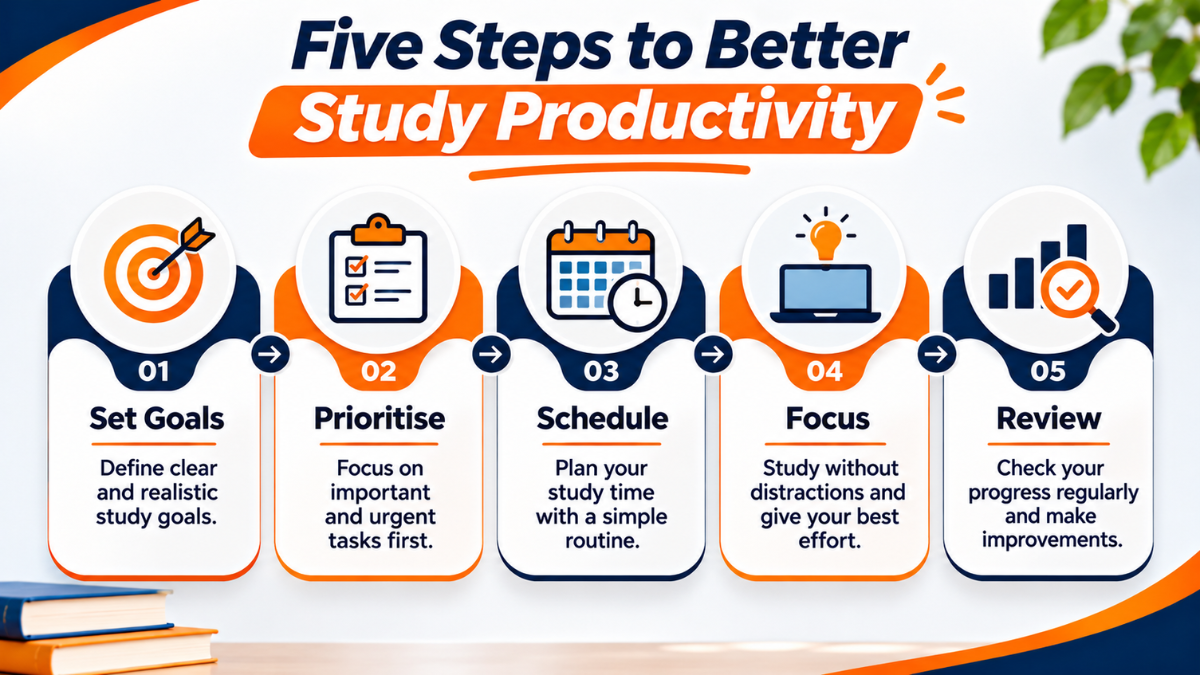
Importance of Time Management for Students
Understanding the importance of time management for students helps learners recognize how planning and organization can improve their academic experience.
Improves Academic Performance
Students who manage their time effectively can allocate sufficient attention to understanding lessons, completing assignments, and revising important concepts.
Regular study sessions also reduce the need to prepare large amounts of material immediately before examinations.
Reduces Academic Stress
Incomplete assignments and approaching deadlines can create unnecessary pressure.
Planning tasks in advance helps students stay organized and approach their responsibilities with greater confidence.
Develops Self-Discipline
Following a consistent schedule encourages responsibility, punctuality, and independence.
These habits can support students throughout their academic journey and future careers.
Improves Student Productivity
Effective time management allows students to focus on important responsibilities instead of spending time on unnecessary activities.
Learning additional student productivity tips can help students improve concentration, minimize distractions, and complete their daily tasks more efficiently.
Supports a Healthy Study-Life Balance
Students need time for academic activities, exercise, hobbies, family, and relaxation.
A balanced schedule helps them manage these responsibilities without neglecting their wellbeing.
10 Effective Time Management Tips for Students
Here are 10 practical time management tips for students that can help improve daily routines and academic productivity.
1. Set Clear Academic Goals
The first step toward effective time management is identifying what you want to achieve.
Instead of setting a general goal such as "study mathematics," create a specific target like "complete 10 mathematics problems before 6 PM."
Clear goals help students understand their priorities and measure their progress.
Practical tip: Write down three important academic goals at the beginning of each week.
2. Create a Realistic Study Schedule
A structured study schedule helps students organize classes, assignments, revision, and personal activities.
Start by identifying fixed responsibilities such as school hours, travel, and meals. Then allocate suitable time for studying and relaxation.
Avoid creating an unrealistic timetable that leaves no room for breaks or unexpected activities.
Understanding how to create a study timetable can help students develop a routine that matches their academic requirements and personal needs.
Practical tip: Prepare your next day's schedule before going to bed.
3. Prioritize Important Tasks
One of the most effective time management strategies for students is learning to prioritize responsibilities.
Students can organize tasks according to their importance and urgency.
For example:
- High priority: Completing an assignment due tomorrow.
- Medium priority: Revising a chapter for an examination next week.
- Low priority: Organizing old notes that are not immediately required.
Prioritizing tasks helps students focus on responsibilities that need attention first.
Practical tip: Begin your study session with the most important task.
4. Use the Pomodoro Technique
The Pomodoro Technique is a simple time management method that divides work into focused sessions and short breaks.
A common approach involves:
- Studying for 25 minutes.
- Taking a five-minute break.
- Repeating the process four times.
- Taking a longer break of approximately 15–30 minutes.
This technique can make difficult tasks feel more manageable.
Students can adjust the duration of study sessions according to their concentration levels and subject requirements.
Practical tip: Use a timer and avoid checking your phone during focused study sessions.
5. Avoid Procrastination
Procrastination is the habit of delaying important tasks even when they need to be completed.
Students may postpone assignments because they feel difficult, boring, or overwhelming.
Learning how to avoid procrastination while studying can help students develop better academic routines.
Start by breaking large assignments into smaller steps and completing one task at a time.
For example, instead of trying to complete an entire project in one sitting, begin with researching the topic and preparing an outline.
Practical tip: Commit to working on a difficult task for just two minutes. Starting is often the hardest part.
6. Break Large Assignments Into Smaller Tasks
Large academic projects can feel overwhelming when students try to complete everything at once.
Dividing assignments into smaller activities makes them easier to manage.
For example, a research project can be divided into:
- Selecting a topic.
- Collecting information.
- Preparing an outline.
- Writing the first draft.
- Reviewing and submitting the project.
Completing each stage provides a sense of progress and makes it easier to meet deadlines.
Practical tip: Assign a completion date to each stage of a major project.
7. Minimize Digital Distractions
Smartphones, social media, online games, and constant notifications can interrupt concentration.
Although digital tools are useful for education, unnecessary distractions may reduce the time available for meaningful learning.
Students can improve focus by keeping their phones away, turning off notifications, and creating a dedicated study environment.
Practical tip: Keep only the learning materials required for your current task on your desk.
8. Take Regular Study Breaks
Studying continuously for several hours can become tiring.
Taking regular breaks allows students to rest and return to their academic tasks with renewed attention.
During breaks, students can stretch, drink water, walk around, or relax away from their screens.
Practical tip: Experiment with different study and break durations to identify what works best for you.
9. Maintain a Healthy Study-Life Balance
Effective time management is not limited to academic responsibilities.
Students also need sufficient sleep, physical activity, nutritious meals, and personal time.
According to the Centers for Disease Control and Prevention (CDC), children aged 6–12 generally need 9–12 hours of sleep, while teenagers aged 13–18 need 8–10 hours per day.
Adequate sleep supports attention, learning, and overall wellbeing.
Practical tip: Include sleep, exercise, hobbies, and relaxation when planning your daily routine.
10. Review Your Progress Weekly
Creating a timetable is useful, but reviewing it regularly is equally important.
At the end of each week, evaluate which tasks were completed and which activities took longer than expected.
Ask yourself:
- Did I complete my academic goals?
- Which activities distracted me?
- Did I spend enough time revising?
- What can I improve next week?
Regular reviews help students identify problems and make practical improvements.
Practical tip: Spend 10–15 minutes every weekend planning the following week's priorities.
Best Time Management Techniques for Students
Different students have different learning styles and academic responsibilities.
Therefore, choosing suitable time management techniques for students can make daily planning easier.
| Technique | How It Works | Best For |
|---|---|---|
| Pomodoro Technique | Uses focused study sessions and short breaks | Improving concentration |
| Eisenhower Matrix | Organizes tasks by urgency and importance | Prioritizing responsibilities |
| Time Blocking | Assigns specific periods to activities | Creating structured routines |
| SMART Goals | Sets clear and measurable targets | Academic goal setting |
| Two-Minute Rule | Encourages starting tasks with a small action | Reducing procrastination |
| Weekly Planning | Reviews deadlines and upcoming tasks | Managing academic workloads |
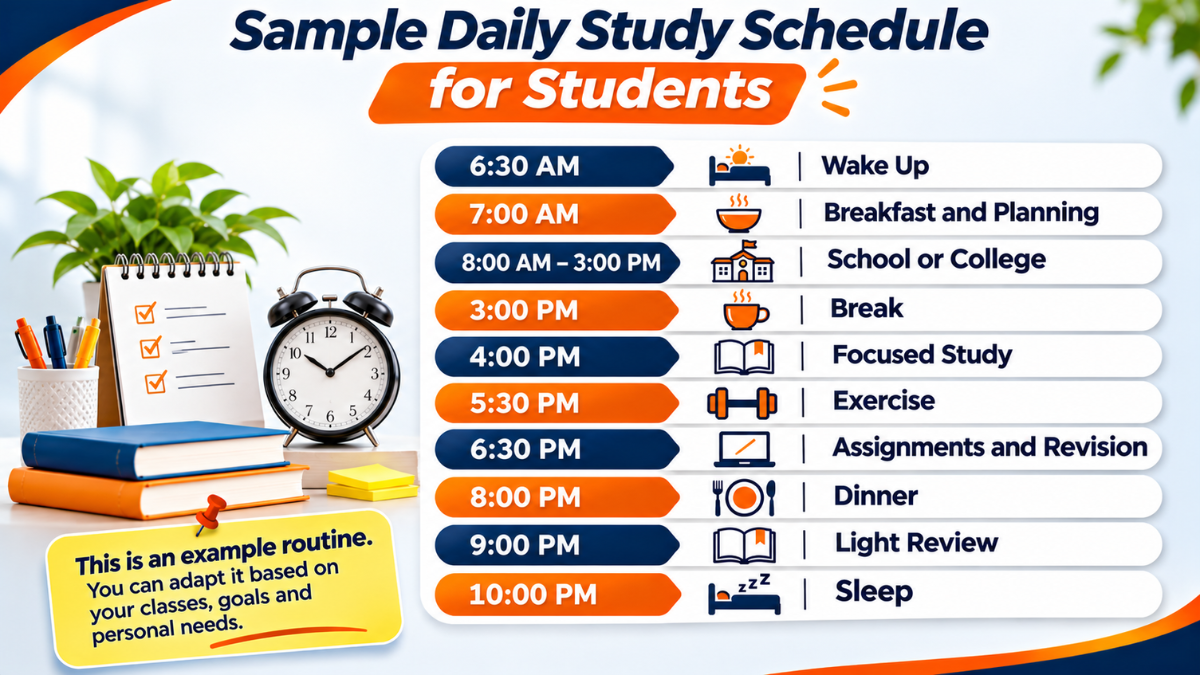
Daily Study Schedule for Students
Creating a daily study schedule for students can help learners balance academic responsibilities and personal activities.
Here is an example of a school student's weekday routine.
| Time | Activity |
|---|---|
| 6:30 AM – 7:00 AM | Wake up and get ready |
| 7:00 AM – 7:30 AM | Breakfast |
| 7:30 AM – 3:30 PM | School and travel |
| 3:30 PM – 4:30 PM | Rest and refreshments |
| 4:30 PM – 5:30 PM | Homework and assignments |
| 5:30 PM – 6:30 PM | Sports and physical activities |
| 6:30 PM – 7:15 PM | Revision and practice |
| 7:15 PM – 8:00 PM | Dinner and family time |
| 8:00 PM – 8:30 PM | Light revision and planning |
| 8:30 PM onward | Relaxation and bedtime routine |
Note: This time table is only an example. Students should adjust their routines according to their age, school hours, academic workload, and sleep requirements.
College students may require more flexible schedules to accommodate lectures, internships, projects, and independent learning.
Common Time Management Mistakes Students Should Avoid
Even students who prepare detailed schedules may struggle to follow them consistently.
Here are some common mistakes that can affect time management skills for students.
Creating an Unrealistic Timetable
Planning too many activities in one day can lead to frustration.
Instead, set achievable goals and leave time for unexpected responsibilities.
Multitasking While Studying
Switching between academic tasks, social media, and messaging can interrupt concentration.
Focus on completing one important activity before moving to another.
Ignoring Difficult Subjects
Students sometimes spend more time on subjects they enjoy while postponing challenging topics.
Allocate additional time to difficult subjects when you feel most alert.
Starting Assignments at the Last Minute
Delaying important tasks increases pressure and leaves less time for corrections.
Begin assignments early and divide them into manageable stages.
Neglecting Sleep and Breaks
Sacrificing sleep to study longer can affect concentration and overall well being.
Maintain a balanced routine that supports both learning and rest.
Time Management for Students During Exams
Examinations often require students to revise multiple subjects within a limited period.
Effective time management during exams can help students organize their preparation and reduce last-minute pressure.
Prepare a Revision Timetable
List all subjects and identify the topics that require additional attention.
Allocate sufficient time for difficult concepts while continuing to revise familiar material.
Practice Previous Question Papers
Solving previous examination papers can help students understand question patterns and practice managing their time.
Use Active Recall
Instead of only rereading textbooks, try answering questions without looking at your notes.
This approach helps identify topics that require further revision.
Avoid Last-Minute Cramming
Preparing regularly over several days or weeks is generally more manageable than studying large amounts of information immediately before an examination.
Take Care of Your Health
Maintain adequate sleep, eat regular meals, and include short breaks during examination preparation.
For more practical guidance, students can refer to our exam preparation tips to organize revision and develop effective study routines.
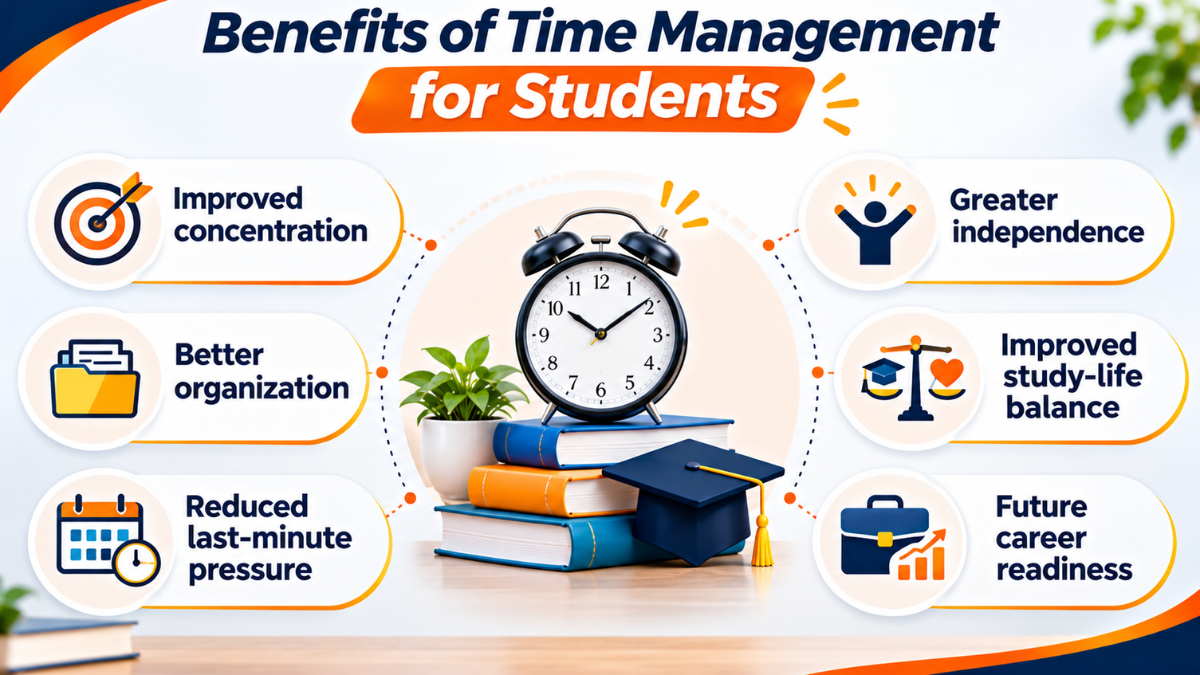
Benefits of Time Management for Students
The benefits of time management for students extend beyond completing assignments on time.
Good time management habits can support academic performance, personal development, and future responsibilities.
Improved concentration: A structured routine helps students focus on important academic activities.
Better organization: Planning makes it easier to manage deadlines, assignments, and examinations.
Reduced last-minute pressure: Completing tasks early provides more time for revision and corrections.
Greater independence: Students become more responsible for managing their own academic schedules.
Improved study-life balance: Effective planning creates opportunities for hobbies, exercise, and relaxation.
Future career readiness: Time management is a valuable skill for higher education, internships, and professional environments.
Conclusion
Time management for students is an important skill that supports academic success, personal development, and a balanced lifestyle.
By setting clear goals, creating realistic schedules, prioritizing responsibilities, and reducing distractions, students can make better use of their available time.
Developing effective study habits and following practical time management techniques can also help students stay organized, prepare for examinations, and manage academic responsibilities with greater confidence.
Remember, effective time management is not about studying every minute of the day. It is about making thoughtful decisions, maintaining consistency, and creating a routine that supports both learning and well being.
Time management is not only useful during school and college but also plays an important role in preparing students for their future careers. Along with developing organizational skills, students can explore career planning for students to understand different career opportunities and make informed decisions about their professional goals.
Start with small changes, stay consistent, and build a study routine that works for you.
Frequently Asked Questions
What are the best time management tips for students?
Some of the best tips include setting clear goals, creating realistic study schedules, prioritizing tasks, avoiding distractions, taking regular breaks, and reviewing progress weekly.
Why is time management important for students?
Time management helps students organize academic responsibilities, prepare for examinations, complete assignments on time, and maintain a balanced lifestyle.
How can students improve their time management skills?
Students can improve their time management skills by creating daily schedules, setting priorities, breaking large tasks into smaller activities, and regularly reviewing their progress.
How can students avoid procrastination?
Students can reduce procrastination by starting tasks early, setting specific deadlines, minimizing distractions, and dividing difficult assignments into smaller steps.
How can students balance studies and extracurricular activities?
Students can maintain balance by prioritizing important tasks, creating realistic schedules, and allocating dedicated time for academics, hobbies, exercise, and relaxation.
Need Help Choosing the Right Degree?
Connect with our education experts and make a confident decision about your future.